Website under construction. Check back soon!
Website under construction. Check back soon!
Website under construction. Check back soon!
Website under construction. Check back soon!
Website under construction. Check back soon!
Website under construction. Check back soon!
Our Principles
What Is Energy Justice and Why It Matters
SCEJC Defines Energy Justice as:
The state of every individual having open access to affordable, clean, reliable, and plentiful energy regardless of their race, place, or pay.
It includes the ability for the community to participate in the policy, social, and economic aspects of the energy system and to understand and make decisions for and about the energy system. Past and ongoing harms caused by energy system decisions must also be remediated.
A Few Facts:
Energy is more than just electricity, because it shapes the conditions of daily life.
Here are a few ways:
- Affordability: Can a household pay its energy bill without sacrificing essentials?
- Reliability: Is power available when people need it?
- Safety and health: Can people stay cool, warm, and healthy?
- Access and choice: Can communities benefit from clean, affordable energy?
- Voice and power: Who makes decisions, whose needs are considered, and who is heard?
Energy Justice Means Fair Energy Access While Addressing Historical and Ongoing Harms
It includes:
- Access to clean, affordable, reliable, safe, and sufficient energy
- Fair distribution of benefits, costs, risks, and pollution
- Meaningful participation in energy decisions
- Recognition of different histories, needs, and lived experiences
- Repair of historical and ongoing harms experienced by marginalized communities
Helpful Models:
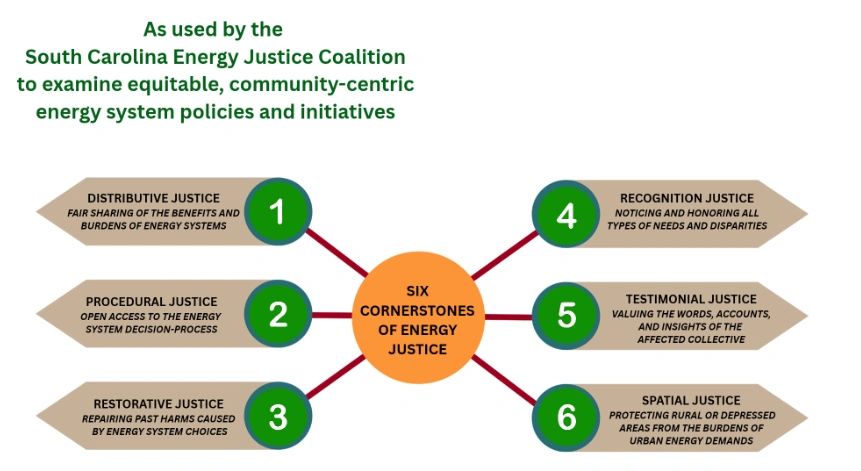
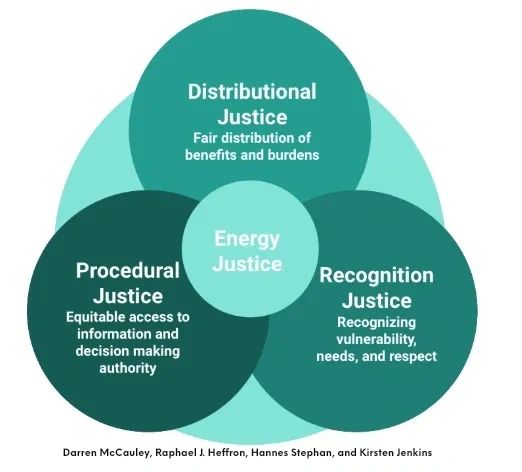
SCEJC is Always Concerned With:
Who pays? Who benefits or bears the burden? Who is considered? Who has the access and power to decide?
Who makes the decisions for South Carolina’s energy system?
Decision-making in SC's energy system is divided between state lawmakers, regulatory commissioners, and private utility companies.
Energy Justice (EnJ) and Environmental Justice (EJ) are separate but complementary equity systems
- Environmental Justice: Addresses the unequal burdens of pollution
- Energy Justice: Focuses on the fairness, equity, and democracy of power systems
Both frameworks are essential to achieving a sustainable and equitable future
Both aim to destroy unfair systems that make poor, rural, and Black/POC communities suffer the most
What should we ask lawmakers and the PSC about proposed energy system changes (rate hikes, IRPs, new infrastructure, mergers, etc.)? Use these questions with utilities, regulators, legislators, developers, local officials:
- How will this decision affect bills for existing customers?
- What data supports the proposal and what information is missing?
- Which communities bear the risks and how were they engaged?
- What protections are enforceable, funded, and measurable?
- How will the public know whether promised benefits actually materialize?
- What happens if projections fail? Who is accountable and how?
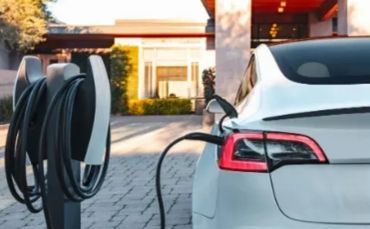
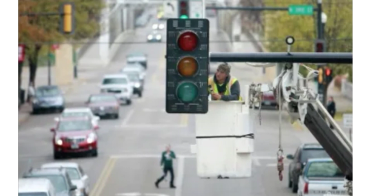
Where Does Energy Show Up in Our Lives?








South Carolina Energy Justice Coalition
712 Richland St, Suite A, Columbia, SC 29201
Mailing Address:
South Carolina Energy Justice Coalition
P.O. Box 6105
Columbia, SC 29260
Copyright © 2026 South Carolina Energy Justice Coalition - All Rights Reserved.
This website uses cookies.
We use cookies to analyze website traffic and optimize your website experience. By accepting our use of cookies, your data will be aggregated with all other user data.